
Coffee and Third Terms
TR’s Announcement He Always Regretted 🗳️

After a landslide win on November 8, 1904 securing 336 electoral votes to Alton B. Parker’s 140, Theodore Roosevelt did what no politician today would ever consider doing. He announced that he would not run again for the presidency.
“Under no circumstances will I be a candidate for or accept another nomination.”
Although the impact of his words did not hit him at the time, those 13 words would haunt him for the rest of his life. And it was the last time that Roosevelt would make a political statement without consulting his confidante and behind-the-scenes political advisor, his wife Edith Kermit Carow Roosevelt.
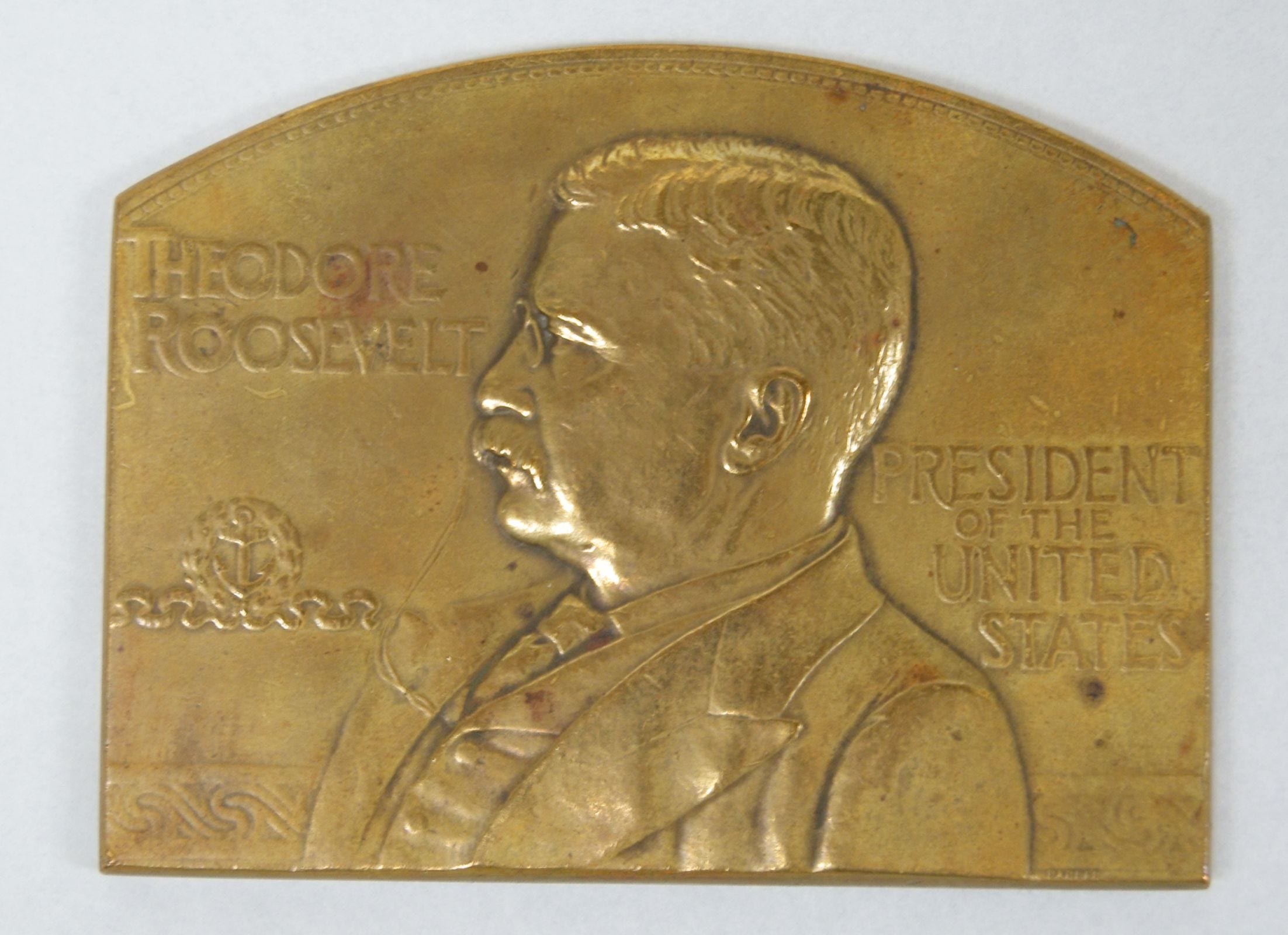
Source: Great White Fleet medal. Theodore Roosevelt Inaugural National Historic Site. Theodore Roosevelt Digital Library. Dickinson State University.
Some may think that this announcement would have made Roosevelt a lame duck during his second term, but he was anything except that. He preserved millions of acres of public land, encouraged the establishment of food safety regulations, oversaw peace between Japan and Russia (for which he was awarded a Nobel Prize), and sent the Great White Fleet around the world as a show of American power—all during his second term.
At the end of his second term, he prepared for his friend and cabinet member, William Howard Taft, to take over—convinced that Taft would continue the progressive policy agenda Roosevelt himself had initiated. Since he couldn’t stand to be bored, Roosevelt planned a scientific expedition to Africa that would collect specimens for the Smithsonian Institution.
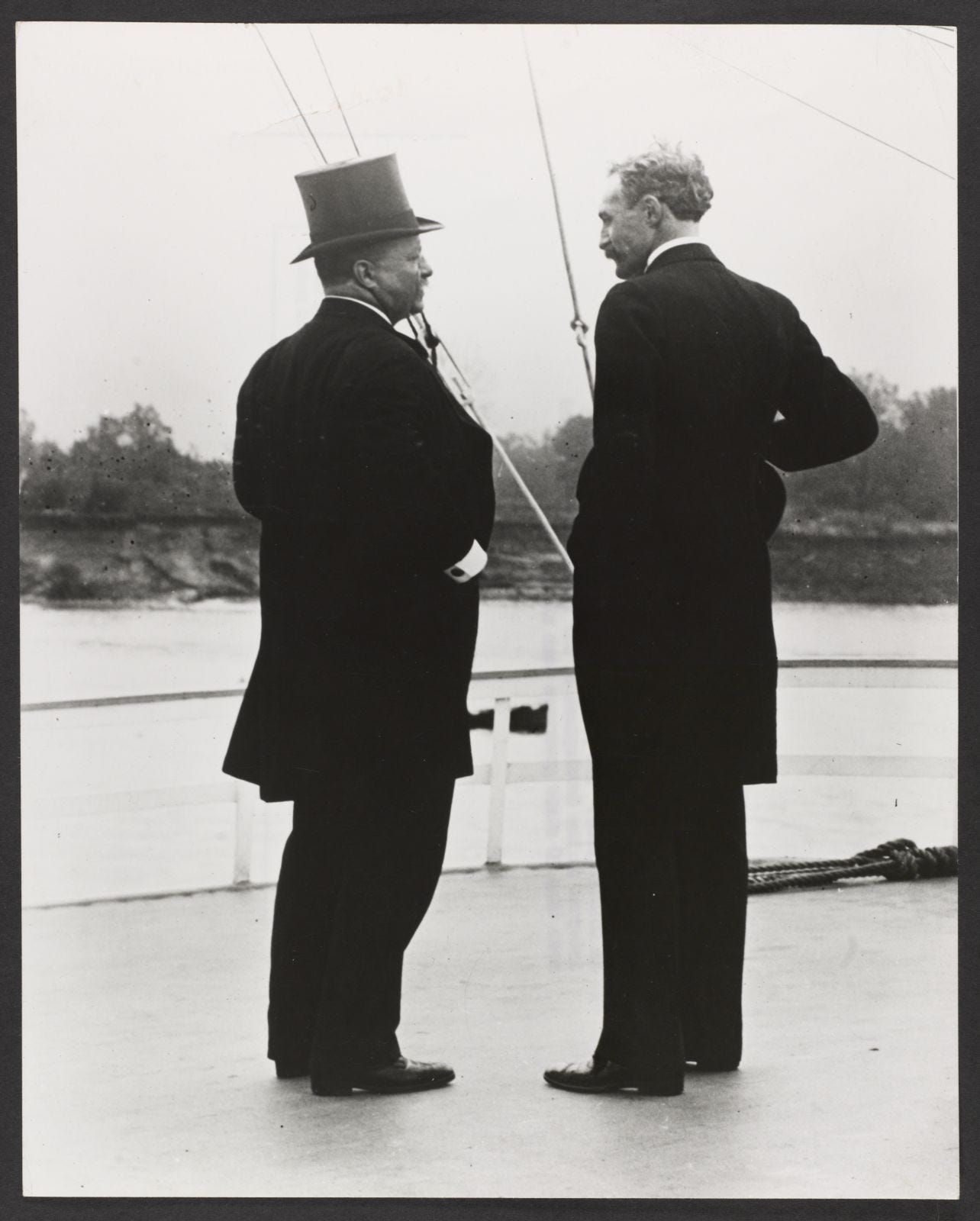
Source: President Theodore Roosevelt and Chief Forester Gifford Pinchot. Library of Congress Prints and Photographs Division. Theodore Roosevelt Digital Library. Dickinson State University.
Unfortunately for Roosevelt, Taft turned out to be less loyal than the former Rough Rider expected. When Roosevelt was overseas, he started to hear how his friend was overturning some of his policies, including firing Roosevelt’s confidante, conservationist Gifford Pinchot, head of the Forest Service.
Roosevelt did not initially plan to run again for the presidency, but as he became increasingly upset by Taft’s changes, he decided something needed to be done. And that’s when those 13 words came back to haunt him.
You’re probably more familiar with Roosevelt’s words to initiate his 1912 campaign: “My hat is in the ring.” But Americans living in 1912 would have remembered his words from eight years before—including Republican Party bosses who intended to support Taft’s candidacy, not Roosevelt’s. Although the former president won more primaries than Taft, party bosses ensured that the current president won the Republican nomination at the convention in June 1912.
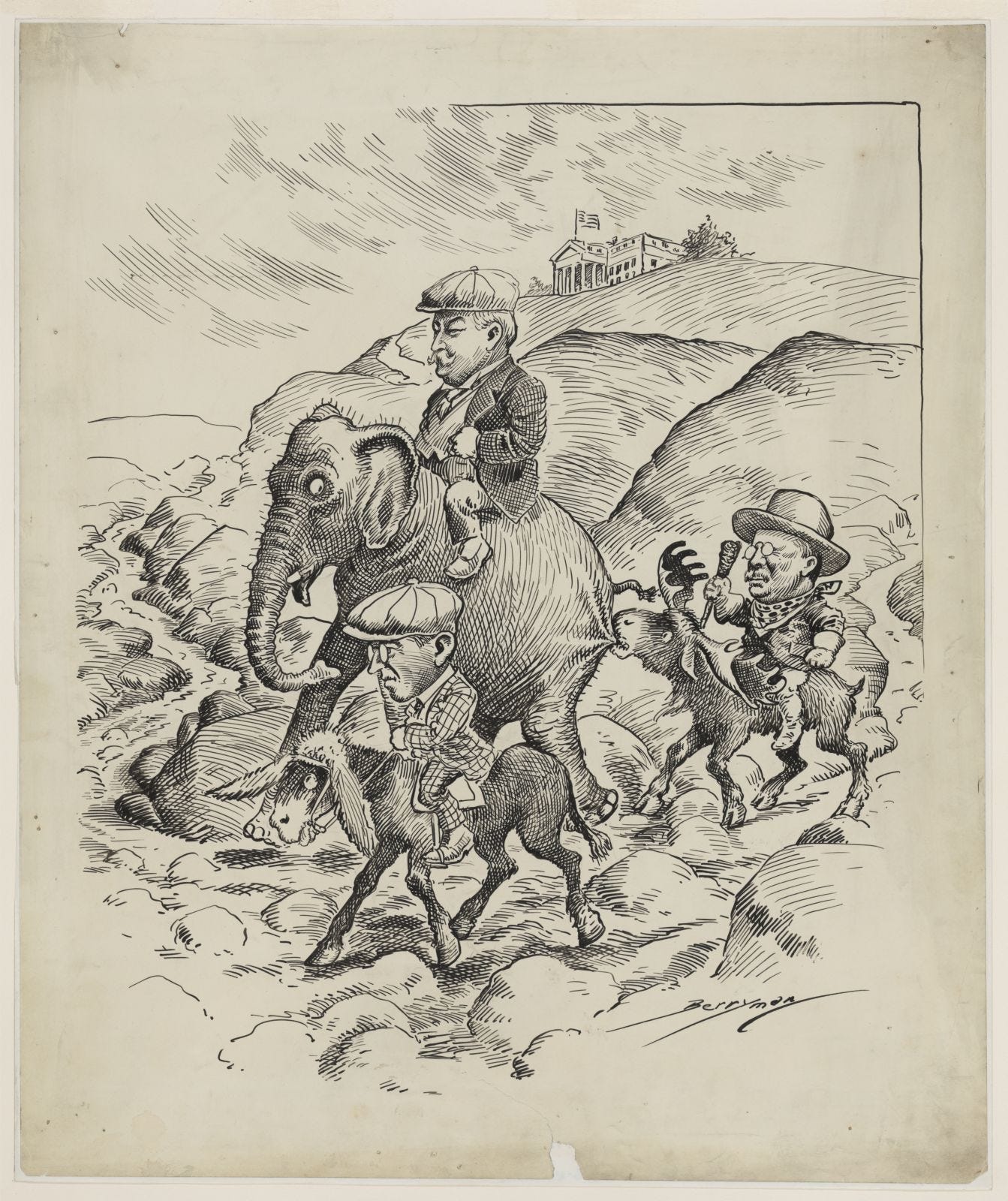
Source: Race to the White House with Wilson on a donkey and Taft on an elephant being bitten by T. Roosevelt on a bull moose. Library of Congress Prints and Photographs Division. Theodore Roosevelt Digital Library. Dickinson State University.
Rejected by his own party, Roosevelt instead formed the progressive party, known better as the Bull Moose Party. In the 1912 general election, he ultimately split the Republican vote, and the presidency went to the Democratic candidate, Woodrow Wilson. Even so, Theodore Roosevelt was the most successful third-party presidential candidate the United States has ever seen.
Obviously, there is so much material in the Theodore Roosevelt Digital Library pertaining to Roosevelt, his 1904 statement, and the 1912 election, but I wanted to highlight a few very interesting items.
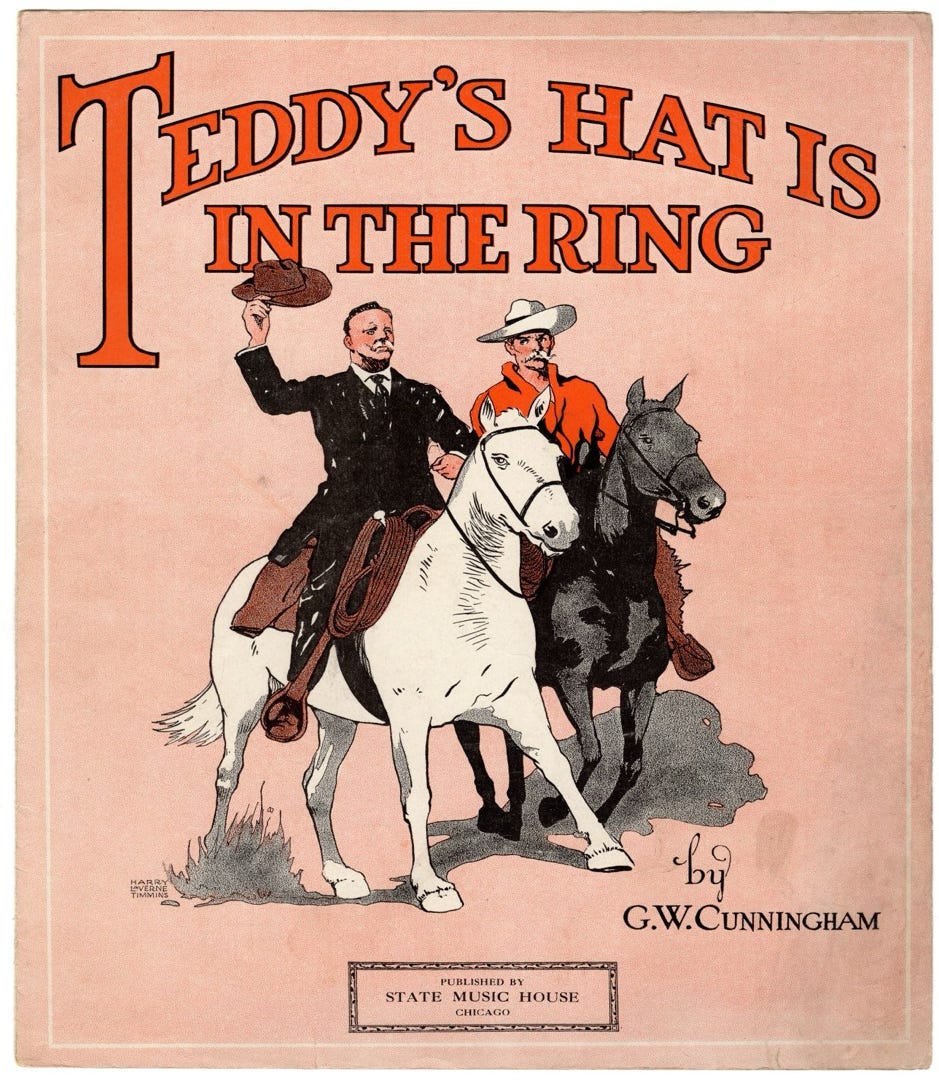
Source: Teddy’s hat is in the ring. Dr. Danny O. Crew Theodore Roosevelt Sheet Music Collection. Dr. Danny O. Crew Collection of American Political Sheet Music. Theodore Roosevelt Digital Library. Dickinson State University.
You may not know, but the split between Roosevelt and Taft during the 1912 election prompted the creation of a cocktail (as well as a mocktail version) that was all the rage in the summer of 1912–the Teddy Hat cocktail. A drinker would signal her support for one of the candidates by either keeping the lemon or orange peel cut in the shape of a Rough Rider hat in her drink (a vote for Roosevelt) or throwing it out (a vote for Taft). Read more about the Teddy Hat cocktail in an article I wrote for Gastro Obscura here.
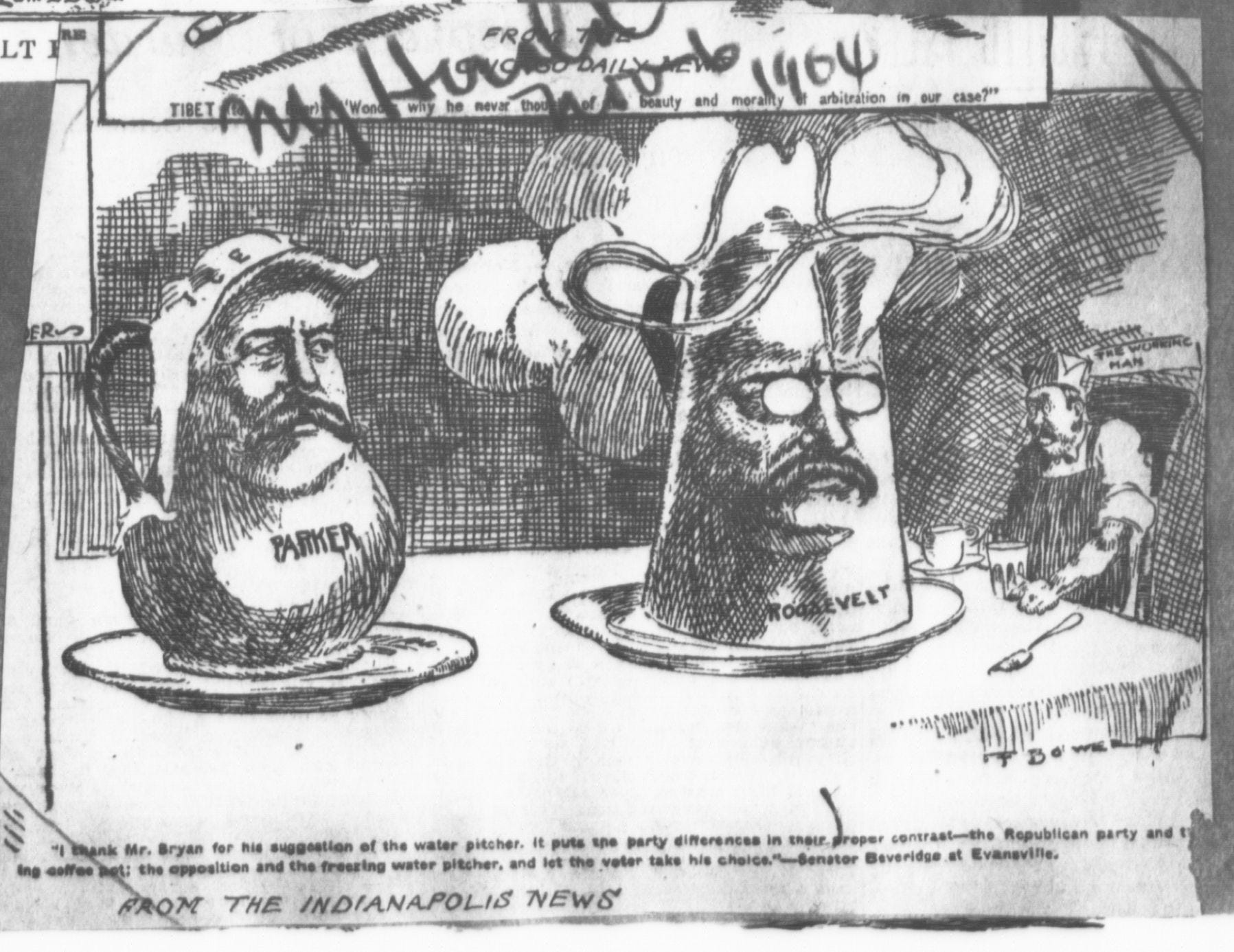
Another letter in the digital library I found very interesting was one TR wrote to author Edward Sandford Martin just a few days before he proverbially tossed his hat in the ring and announced his candidacy in February 1912. In it TR insists refusing to run again in 1904 was like refusing a cup of coffee at a particular meal. That didn’t mean one would never drink a cup of coffee again!
“In other words, as the whole reason for the third term tradition could only apply to a third consecutive term, I felt that it would be misleading, for it would open itself to misconstruction, if I spoke with the meticulous accuracy which some good people apparently think necessary. Frequently when asked to take another cup of coffee at breakfast, I say ‘No thank you, I wont [sic] take another cup’. This does not mean that I intend never to take another cup of coffee during my life; it means that I am refusing for that breakfast; and that my remark is limited to that breakfast; and no one would apply it otherwise!”
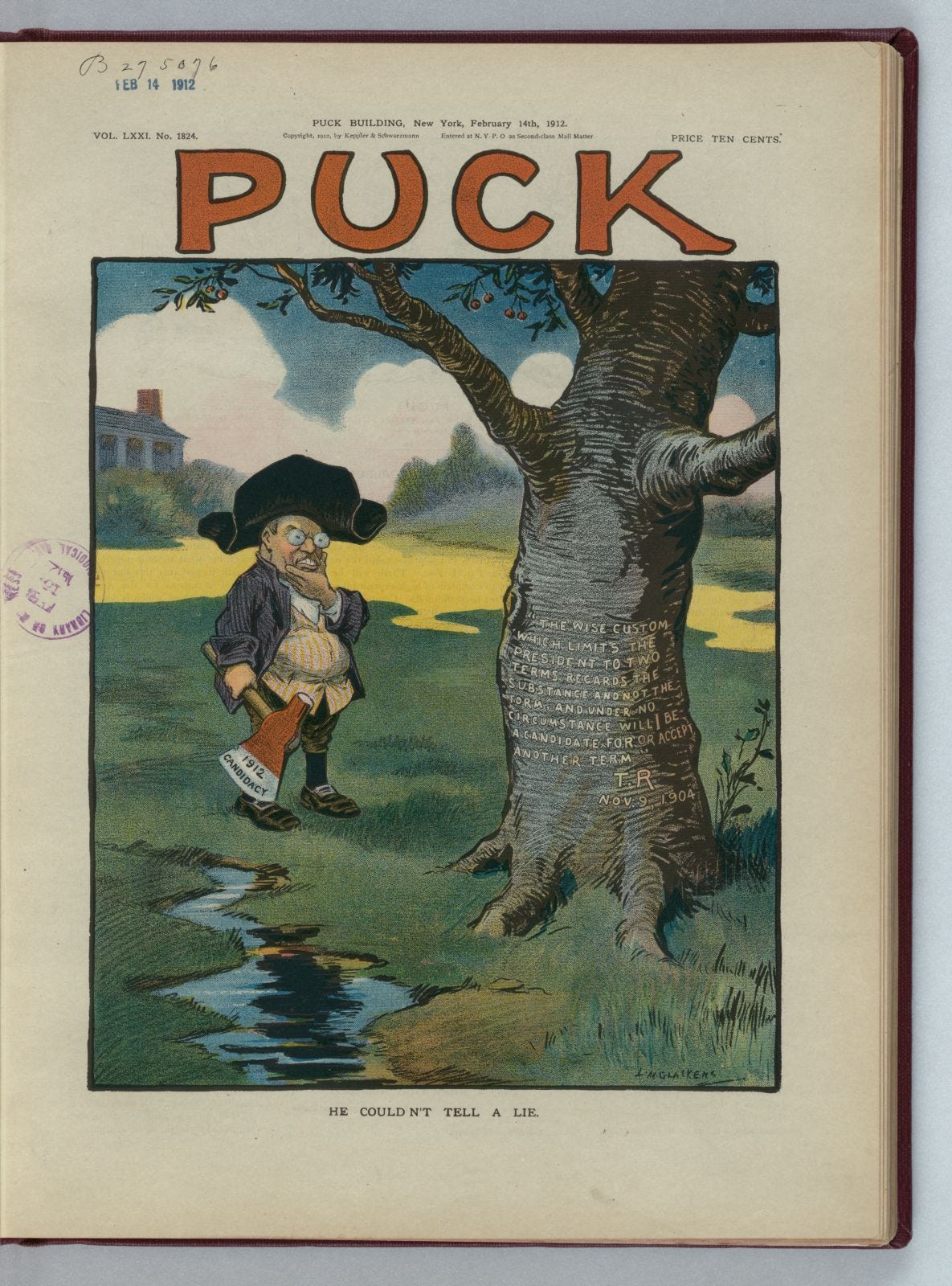
Finally, you can’t help but love Puck magazine’s cartoon of Roosevelt depicted as George Washington deciding whether or not to chop down a cherry tree with his definitive statement from 1904 or the former president depicted as Joan of Arc receiving a vision for a third term, also in Puck magazine.
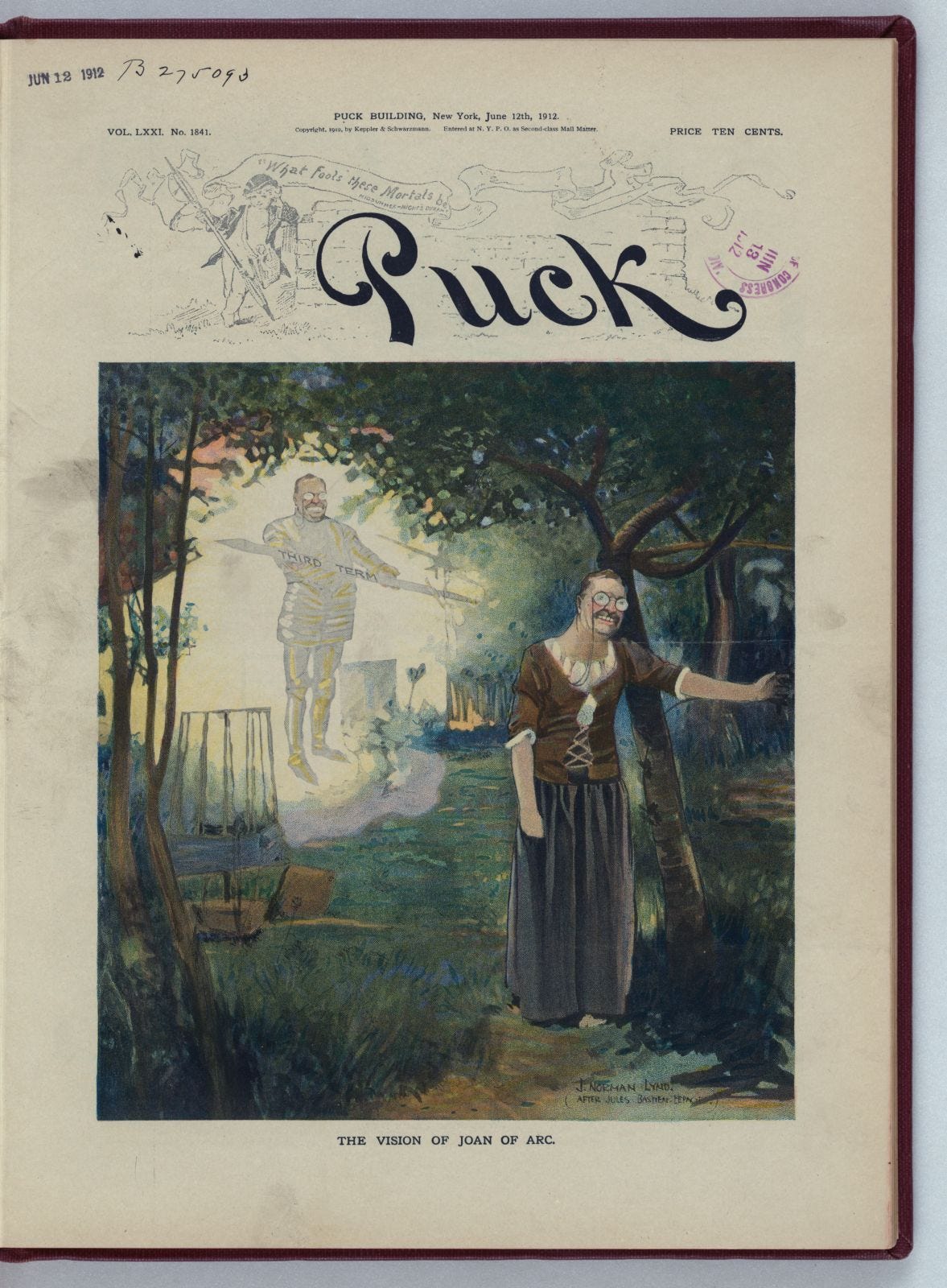
Today Theodore Roosevelt’s deliberations wouldn’t relate as we have a two-term limit (for consecutive or non-consecutive terms) thanks to the 22nd amendment. But I find it interesting to look back at history and see how Roosevelt wrestled with reframing his denunciation of being a presidential candidate for a third term in 1904—and manage to bring it back to coffee!
I think coffee is good with any meal! I can see why Roosevelt felt as though he had to run again in order to bring things back to order. He really did care for the country.